
We Built One Website for Two Audiences
The Sponsor and the Operator Are Solving Different Problems. Our Website Reflects That.
Why we stopped building for everyone and started building for two very specific readers.
~5 min read
Most service company websites are built around an anxiety: what if someone visits and doesn't see themselves? So the language gets softened, the positioning gets broadened, and the page tries to speak to everyone at once. The result is a site that technically works for every visitor and meaningfully connects with none of them.
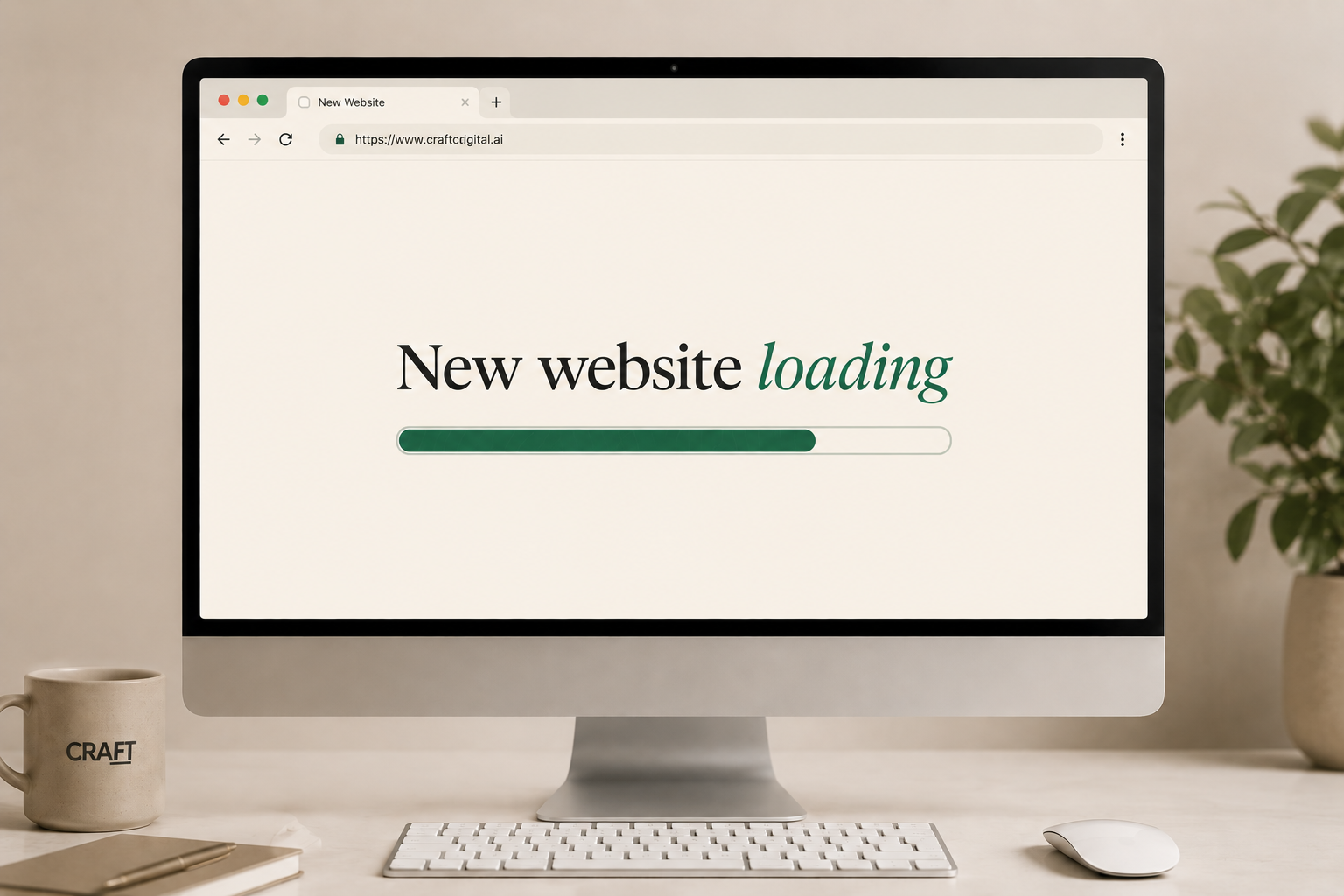
When we rebuilt craftdigital.ai, we made a deliberate choice to do the opposite. The new site isn't built for a broad audience. It's built for private equity — specifically, for two kinds of people inside a PE deal who have almost nothing in common when it comes to what they need from us.
The architecture of the site is itself a point of view. This post explains the thinking behind it.
The Insight That Drove the Design
There's a line on the new site that captures the tension we were trying to resolve: the sponsor and the operator are solving different problems.
The GP or operating partner sitting at the fund level is thinking about EBITDA growth, hold period math, exit multiple, and what the value creation plan actually commits to. They need to know that operational improvement is real, measurable, and tied to a return — not a consulting engagement that produces a deck and a follow-up call. Their frame is the portfolio. Their constraint is time and capital allocation across multiple companies at once.
The CEO or COO running a portco is living something entirely different. They're accountable to a number that moves every month. They're managing a team that may have been running on spreadsheets and tribal knowledge before the acquisition. They have a sales process that inconsistently delivers, leads that fall through the cracks, a CRM nobody fully trusts, and a sponsor asking for cleaner reporting than they currently have the infrastructure to produce. Their frame is the business they're running today. Their constraint is bandwidth and the relentless pressure of near-term performance.
These two people are both inside the same deal. They both matter to how Craft engages. But they are not reading the same page, and writing one page that tries to serve both of them equally means writing a page that serves neither of them well.
GPs and operating partners need EBITDA growth to be systematic, not episodic — and AI that maps to a return, not a pilot program. Their job is value creation at scale across the portfolio.
CEOs, COOs, CROs, and their teams need the execution infrastructure that makes the strategy actually run. Less time managing systems. More time managing the business.
Why PE, and Why Now
The decision to build specifically for PE wasn't aesthetic. It came out of real conversations with people inside the market — operating partners, principals, and portco executives who all described the same gap in slightly different language.
The environment has changed. Bain's 2026 Global Private Equity Report put a number on what most practitioners already feel: clearing benchmark returns in today's market requires roughly 12% annual EBITDA growth from portfolio companies, up from around 5% historically. Multiple expansion isn't the tailwind it was. Financial engineering has real limits. The pressure to create value operationally — inside the business, at the execution layer — has never been higher.
now required vs. ~5% historically
Bain 2026 GPER
every dollar of EBITDA
created
At the same time, the AI market has flooded the zone with noise. Every software vendor has rebranded as an AI company. Every consulting firm has an AI practice. And according to MIT's 2025 State of AI in Business research, 95% of GenAI pilots across enterprises produce no measurable return — fewer than 5% reach production. PE firms have watched portcos spend on AI initiatives that didn't move EBITDA. The skepticism is earned.
That combination — genuine operational urgency, a crowded and untrustworthy vendor market, and a high cost of getting it wrong — is exactly the environment Craft was built for. We don't sell AI as the point. We sell EBITDA growth. AI is the mechanism we use to deliver it. That distinction matters more right now than it ever has, and the website needed to communicate it clearly to people who will see through anything less.
What the Two Pages Actually Say
The private equity page is built for the GP, the operating partner, the principal who is managing value creation across a portfolio. The language is about the fund, the hold period math, the return on every dollar of EBITDA at exit. It's direct about the skepticism: AI initiatives inside portcos have underdelivered, and the reason is usually that they were sold as strategy when the actual problem was execution. We position against that failure mode explicitly, because the people reading that page have already lived it somewhere in the portfolio.
The portfolio company page is built for the operator inside the portco — the CEO or COO or CRO who is personally accountable for the number. The language shifts to match what their day actually looks like: how many hours it takes to pull a management report, what it costs when a lead sits uncontacted for 48 hours, what happens to sales accountability when the CRM data is stale. The problems are operational and immediate, not strategic and theoretical. The page earns credibility by naming them specifically.
That sentence from the portfolio company page is probably the most honest description of what we actually build. The infrastructure we put in place serves both audiences simultaneously. A portco CEO gets cleaner processes and fewer fires. An operating partner gets visibility into performance that doesn't require a quarterly deck to interpret. The work is the same work — but how you explain its value to each person is completely different.
A Website Is a Statement About Who You're For
There's a discipline required to build something like this that most companies find uncomfortable: you have to be willing to be less interesting to people who aren't your audience. A site built specifically for PE firms and the portcos they own is, by definition, a site that isn't trying to speak to venture-backed startups, mid-market businesses without PE backing, or the long tail of companies that could technically benefit from what we do.
That's the point. Clarity about who you serve is a form of respect for that audience. It says: we understand your world specifically — not generically, not as a subset of "businesses that want to grow," but as the GP managing a hold period under real return pressure, or the portco COO running a company whose systems weren't built for the scrutiny that comes with institutional ownership.
Most portfolio underperformance is an execution gap, not a strategy gap. The strategy at most portcos is actually fine. The system that delivers the strategy is broken. We've built a website that reflects that POV — not as a tagline, but as the organizing principle for how every page communicates. If you run a PE firm or you're operating inside a PE-backed company and you land on the site, it should feel like someone built it for you specifically.
Because we did.
The Value Creation Assessment is how we start: a three-week diagnostic across one or two priority portcos that identifies execution gaps, maps them to P&L impact, and produces a 100-day implementation roadmap. Fixed fee. Designed to come out of the value creation plan.
If that's a conversation worth having, we're available for a working session — not a demo.
Craft Digital is a value creation partner for PE-backed companies.
We work post-close, inside portfolio companies, fixing the execution gaps that hold back revenue and margin performance.